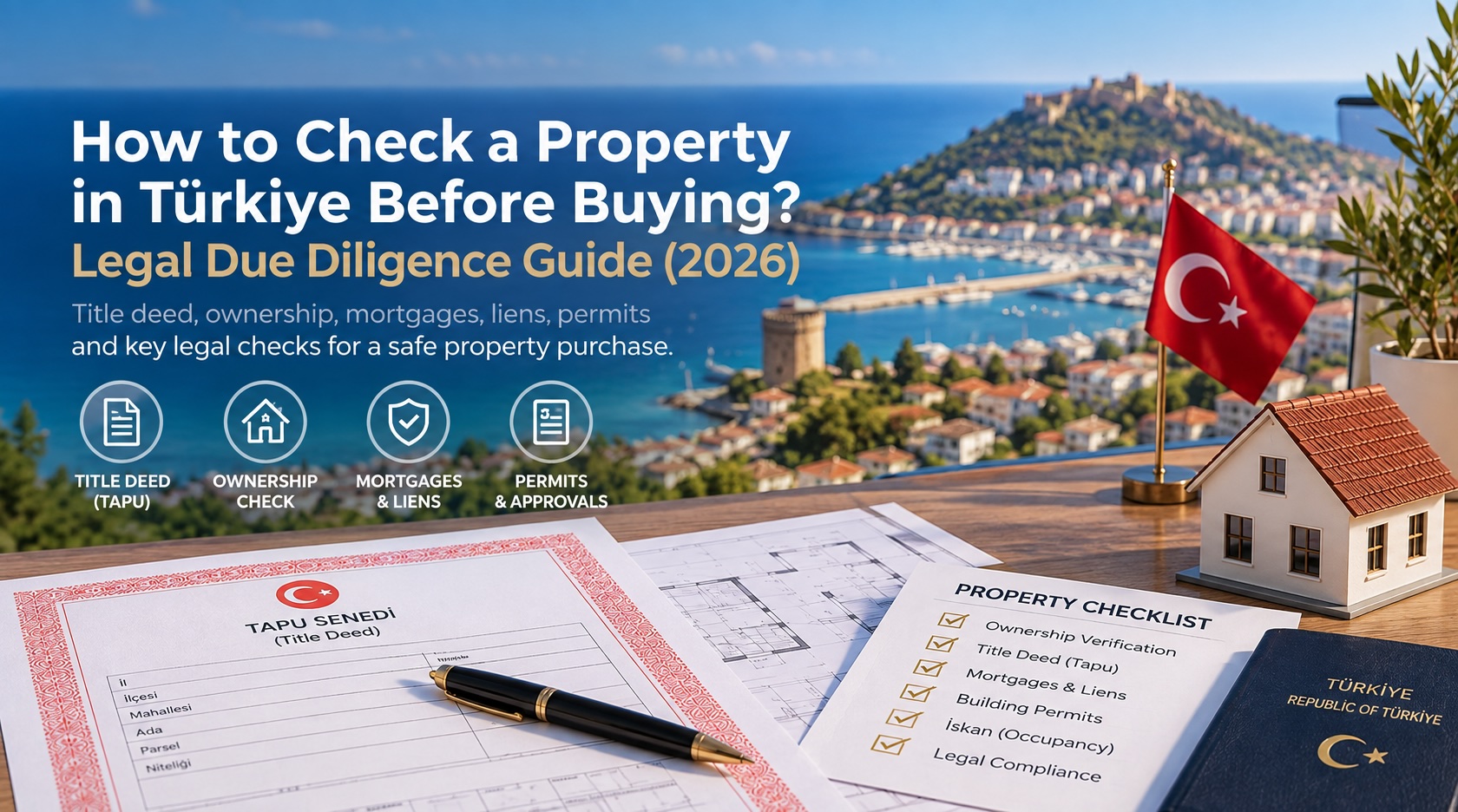
How to Check a Property Before Buying in Türkiye: Legal Due Diligence Guide (2026)
Finding the right apartment or villa in Türkiye is only the first part of a successful property purchase. Before paying a substantial deposit or completing the title deed transfer, buyers should also understand exactly what they are buying and whether the property's official records match the property being offered for sale.
This process is commonly known as property due diligence.
For foreign buyers, legal and administrative terminology in Türkiye can initially appear complicated. Tapu, Ada, Parsel, Kat Mülkiyeti, Kat İrtifakı, İskan, mortgages and annotations are just some of the terms that may appear during a transaction.
The objective, however, is straightforward: verify the property, verify the seller and identify important legal or administrative issues before the purchase is completed.
This 2026 guide explains the main checks foreign buyers should consider when purchasing property in Türkiye, particularly in Alanya.
What Is Property Due Diligence in Türkiye?
Property due diligence is the process of checking the legal, registration and relevant administrative status of a property before committing to the purchase.
It goes beyond viewing the apartment, negotiating the price and checking whether you like the location.
Depending on the property, due diligence may include verifying:
- Who legally owns the property
- Whether the seller has authority to sell it
- The correct title deed and Land Registry information
- Ada, Parsel and independent section details
- Mortgages, liens, annotations or restrictions
- The property's registered ownership type
- Building and occupancy documentation where relevant
- Whether the physical property corresponds with official records
- Special issues relating to new developments or off-plan purchases
The exact checks will vary depending on whether you are buying a completed resale apartment, a new-build property, a villa, land or a property still under construction.
If you are unfamiliar with the overall purchase procedure, start with our step-by-step guide to buying property in Alanya as a foreign buyer.
1. Verify Who Owns the Property
One of the first questions is also one of the most important:
Is the person offering the property for sale actually entitled to sell it?
The registered ownership information should be checked against the transaction.
The seller may be:
- The registered individual owner
- Several co-owners acting together
- A company that owns the property
- An authorised representative acting under a power of attorney
These situations require different documentation.
For example, if a property has several registered owners, the transaction should properly reflect the rights and participation of the relevant owners.
If someone is acting on behalf of the owner, the authority contained in the power of attorney should be appropriate for the transaction.
Never assume that possession of the keys, residence in the property or involvement in negotiations automatically proves legal ownership.
2. Check the Current Land Registry Information
A photograph or old copy of a Tapu can be useful for initial identification, but important decisions should be based on the property's current official status.
Relevant information may include:
- Province
- District
- Neighbourhood
- Ada number
- Parsel number
- Independent section number
- Registered property type
- Ownership share
- Registered owner or owners
The objective is to make sure that the property being marketed, viewed and negotiated is the same property identified in the official records.
Foreign buyers should be particularly careful when a property is described informally using only a site name, block letter and apartment number. Those descriptions should ultimately correspond with the official property information.
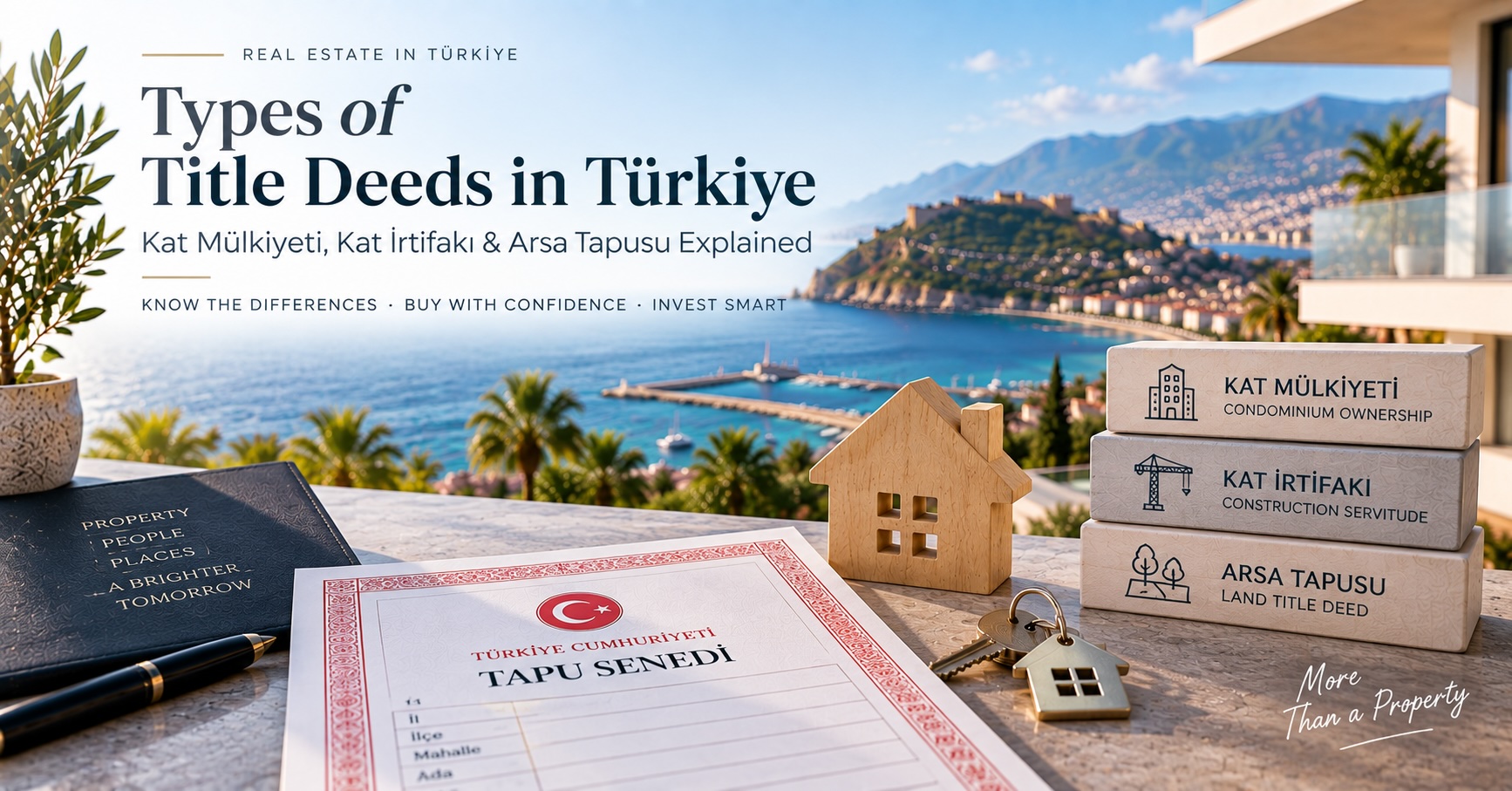
3. Understand the Type of Title Deed
Not every property in Türkiye has exactly the same ownership structure.
Three terms buyers frequently encounter are:
- Kat Mülkiyeti
- Kat İrtifakı
- Arsa Tapusu
The distinction can be important, particularly when comparing completed apartments, new developments and properties connected with land shares.
A buyer should understand what is officially registered rather than relying only on how the property is described in an advertisement.
We explain these differences in detail in our dedicated guide to title deed types in Türkiye, including Kat Mülkiyeti, Kat İrtifakı and Arsa Tapusu.
4. Check for Mortgages on the Property
A property can be owned by the seller while also being subject to a registered mortgage.
This does not necessarily mean that the property cannot be sold. However, the mortgage should be identified and its treatment within the transaction clearly understood.
Questions may include:
- Is there a registered mortgage?
- Who is the mortgage holder?
- What needs to happen for the mortgage to be released?
- Will it be removed before or as part of the transfer process?
A buyer should not simply assume that every financial obligation connected with the property will disappear automatically when the purchase price is paid.
5. Check for Liens, Annotations and Restrictions
Mortgage checks are only one part of reviewing the property's official status.
Depending on the property, official records may contain other rights, annotations, restrictions or encumbrances that require attention.
The relevance of an entry depends on its nature. Some may be routine or manageable, while others can materially affect a transaction.
This is one reason why buyers should avoid reducing due diligence to a simple question such as “Does the property have a Tapu?”
A Tapu confirms an ownership registration structure; the wider registry position can contain additional information that matters to the buyer.
6. Make Sure the Apartment Matches the Official Independent Section
This check sounds obvious, but it is important.
The apartment you visit should correspond with the independent section that is actually being sold.
Relevant information can include:
- Block
- Floor
- Independent section number
- Registered characteristics
- Relevant project information
For example, a seller or agent may refer to a unit using the door number visible in the building. The official independent section number in the registered documentation may not always be presented in exactly the same way.
The transaction should therefore be based on the official identity of the property rather than assumptions based on door numbers or marketing descriptions.
7. Check Whether the Physical Property Matches the Approved Documentation
A property can look excellent during a viewing and still contain physical alterations that deserve further investigation.
Examples can include:
- Enclosed balconies
- Combined rooms
- Extensions
- Converted terraces
- Changes to internal or external areas
- Additional structures around villas
Not every alteration automatically creates a legal problem. However, significant differences between the approved documentation and the current physical property should not simply be ignored.
This becomes particularly important with villas, duplex apartments, roof terraces and properties that have been extensively renovated.
8. Check the Building Status and İskan Where Relevant
When evaluating a completed building, buyers may also encounter the term İskan, commonly used for the building occupancy permit.
Tapu, Kat Mülkiyeti and İskan are related concepts, but they are not the same thing.
The relevance of building permits and occupancy documentation depends on the particular property and its registration status.
For a completed property that still has Kat İrtifakı status, for example, it can be particularly useful to understand:
- Whether construction has been completed according to the approved project
- The building's current occupancy documentation
- Why Kat Mülkiyeti has or has not been established
- Whether there are unresolved administrative matters
The correct approach is to assess the title deed and building documentation together where necessary.
9. Be More Careful With Off-Plan and Under-Construction Property
Buying a completed resale apartment and buying a home that has not yet been built are fundamentally different transactions.
With an off-plan property, due diligence may extend beyond the individual unit to the development itself.
Important questions can include:
- Who owns the development land?
- What is the current title deed structure?
- Does the project have the relevant approvals?
- How is the future independent section identified?
- What exactly is the developer contractually promising?
- What is the construction and delivery schedule?
- When and under what conditions will ownership be transferred?
- How are instalment payments structured?
Because the buyer is purchasing something that may not yet physically exist in its final form, the contractual and project documentation becomes especially important.
Read our detailed guide to buying off-plan property in Alanya before considering this type of investment.
10. New-Build and Resale Properties Require Different Checks
A newly completed apartment and a 10-year-old resale apartment can both be good purchases, but the due diligence priorities may differ.
With a new development, attention may focus more heavily on:
- Developer documentation
- Project approvals
- Construction completion
- Title deed status
- Delivery obligations
With a resale property, additional practical questions can include:
- Existing ownership history
- Physical alterations made by previous owners
- Current site management situation
- Outstanding property-related obligations
- The condition of the building and apartment
If you are deciding between the two, see our New Build vs Resale Property in Alanya comparison.
11. Ask About Site Management and Outstanding Dues
Many apartments and villas in Alanya are located within residential complexes with shared facilities such as:
- Swimming pools
- Gardens
- Security
- Elevators
- Fitness areas
- Saunas or social facilities
These services are generally funded through regular site management fees, commonly known as aidat.
Before purchasing, it is sensible to understand:
- The current monthly or annual aidat
- What the fee includes
- Whether major additional expenditure is planned
- Whether any outstanding dues connected with the property need to be clarified
This is both a practical ownership issue and part of understanding the true ongoing cost of the property.
12. Understand Taxes and Transaction Costs Before Signing
Legal due diligence should not be confused with financial planning, but the two should happen together.
A buyer should understand the expected costs of the transaction before committing to the purchase.
These can include, depending on the transaction:
- Title deed transfer-related costs
- Applicable taxes and official charges
- Valuation-related expenses where applicable
- Translation or interpreter expenses
- Professional service costs
- Other transaction-specific expenses
For a detailed breakdown, read our guide to property taxes and buying costs in Alanya.
13. Check the Documents Before Paying a Significant Deposit
A deposit can be an important part of securing a property, particularly when the buyer and seller have agreed on the main commercial terms.
However, the larger the financial commitment, the more important it becomes to know what has already been verified.
Before paying a significant deposit, the buyer should ideally understand:
- Who owns the property
- What property is actually being purchased
- The agreed purchase price
- The important title deed information
- Any known mortgage or restriction issues
- The conditions under which the deposit is paid
- What happens if one party cannot complete the transaction
The appropriate documentation depends on the transaction, but informal assumptions should not replace clear written terms where significant money is involved.
14. Be Careful When the Seller Uses a Power of Attorney
Property transactions in Türkiye do not always require the owner to be physically present at every stage.
A seller may act through an authorised representative.
In that situation, the important issue is not merely whether a document called a power of attorney exists, but whether the authority contained in that document is appropriate for the intended transaction.
The identity of the representative and the scope and validity of the authority should be checked as part of the transaction.
The same principle applies when a foreign buyer chooses to appoint a representative to complete certain procedures on their behalf.
15. Do a Final Check Before the Title Deed Transfer
Due diligence should not necessarily be treated as something performed once at the beginning of negotiations and then forgotten.
Before completing the title deed transfer, the transaction should still correspond with what the parties agreed.
Depending on the circumstances, final checks may include confirming:
- The correct buyer and seller
- The correct property
- The agreed financial terms
- The current registry situation
- How any identified mortgage or other issue is being resolved
- Whether the required transaction documents are ready
This final verification helps reduce the risk of discovering an important discrepancy at the last moment.
What Documents May Be Needed When Buying Property in Türkiye?
Due diligence concerns the property, but the buyer must also prepare the documents required for the transaction.
The exact requirements can depend on the buyer, nationality, transaction and current regulations.
Rather than duplicating the complete document list here, we have prepared a separate guide to the documents foreign buyers may need when purchasing property in Türkiye.
Legal Due Diligence vs Property Buying Checklist: What Is the Difference?
A general property buying checklist covers the entire decision: location, budget, property type, viewing, negotiation, costs, legal checks and the purchasing process.
Legal due diligence goes deeper into the official and legal status of the specific property you are considering buying.
Both are useful, but they serve different purposes.
If you are still at the property selection stage, use our Property Buying Checklist in Alanya alongside this due diligence guide.
Red Flags That Deserve Further Investigation
Not every unusual situation means that a property should be rejected. However, certain circumstances deserve additional clarification before proceeding.
- The seller's identity does not clearly correspond with the ownership information
- The apartment being shown cannot easily be matched with the official independent section
- The ownership structure is different from what was advertised
- A completed property has documentation that the buyer does not understand
- There is an unexplained mortgage, annotation or restriction
- A villa or apartment contains substantial alterations not reflected in the available documentation
- The seller is represented by another person but the authority to sell is unclear
- The buyer is pressured to make a large payment before basic checks can be completed
- Important promises are made verbally but are absent from the written agreement
A red flag does not always mean “do not buy.” It means do not ignore the issue — investigate it before proceeding.
A Practical Due Diligence Sequence
For many property purchases, the process can be approached in the following order:
- Select the property and agree on the basic commercial terms.
- Identify the property officially using the relevant title deed and registration information.
- Verify ownership and the seller's authority to complete the sale.
- Review the title deed status and relevant registry information.
- Check mortgages, annotations and restrictions where applicable.
- Compare the physical property with official information and investigate significant discrepancies.
- Review building or project documentation where relevant.
- Clarify the financial terms and deposit conditions in writing.
- Prepare the buyer's required documentation.
- Carry out the final checks before completing the title deed transfer.
The precise sequence may vary, particularly for off-plan developments, corporate sellers or transactions involving powers of attorney.
Frequently Asked Questions
How do I check a property before buying in Türkiye?
You should verify the registered owner, identify the property correctly in the official records, review its title deed status and check relevant mortgages, annotations or restrictions. Depending on the property, building permits, occupancy documentation, project information and physical alterations may also need to be reviewed.
How can I check whether the seller really owns the property?
The seller should correspond with the current official ownership information. If another person is acting for the owner, their legal authority to complete the relevant transaction should be verified.
Is seeing the Tapu enough before buying?
No. The Tapu is extremely important, but due diligence may also require reviewing the current registry situation, encumbrances, ownership type, building documentation and whether the physical property corresponds with official records.
Can a property with a mortgage be sold in Türkiye?
The existence of a mortgage does not automatically make a sale impossible. However, the mortgage must be identified and the procedure for dealing with it as part of the transaction should be clearly established before completion.
Should I check İskan before buying an apartment?
The relevance of İskan and other building documentation depends on the property's specific status. It can be particularly important when assessing a completed building and understanding its administrative and registration situation.
Should I pay a deposit before checking the property?
The appropriate sequence depends on the transaction, but buyers should avoid making a substantial financial commitment without understanding the property's ownership, identity and important legal circumstances, as well as the written conditions governing the payment.
Is Kat Mülkiyeti enough to prove that a property is problem-free?
No. Kat Mülkiyeti is an important ownership status for completed independent sections, but mortgages, annotations, restrictions, physical discrepancies and other transaction-specific matters may still require checking.
Final Thoughts
Buying property in Türkiye does not need to be complicated, but important checks should take place before significant money changes hands.
A good due diligence process answers three fundamental questions:
- Who is selling?
- What exactly are you buying?
- Is there anything in the property's legal or administrative status that needs to be resolved before completion?
Once these questions are properly addressed, buyers can approach the title deed transfer with much greater clarity.
For foreign buyers in Alanya, working with experienced professionals is particularly useful because the purchasing process involves Turkish-language documents, local administrative procedures and property-specific checks.
M² Real Estate assists international buyers throughout the property search and purchasing process in Alanya. Where a transaction requires specialised legal, technical or other professional advice, the appropriate independent professional support can also be coordinated.
Planning to buy property in Alanya? Explore the available properties with M² Real Estate and make sure the property you choose is properly understood before you complete the purchase.
This article provides general information only and does not constitute legal, tax or other individual professional advice. The appropriate due diligence depends on the specific property, transaction and circumstances, and current official requirements should be confirmed when purchasing.
Поделиться постом: